Israel launches ‘pre-emptive’ strike on Iran
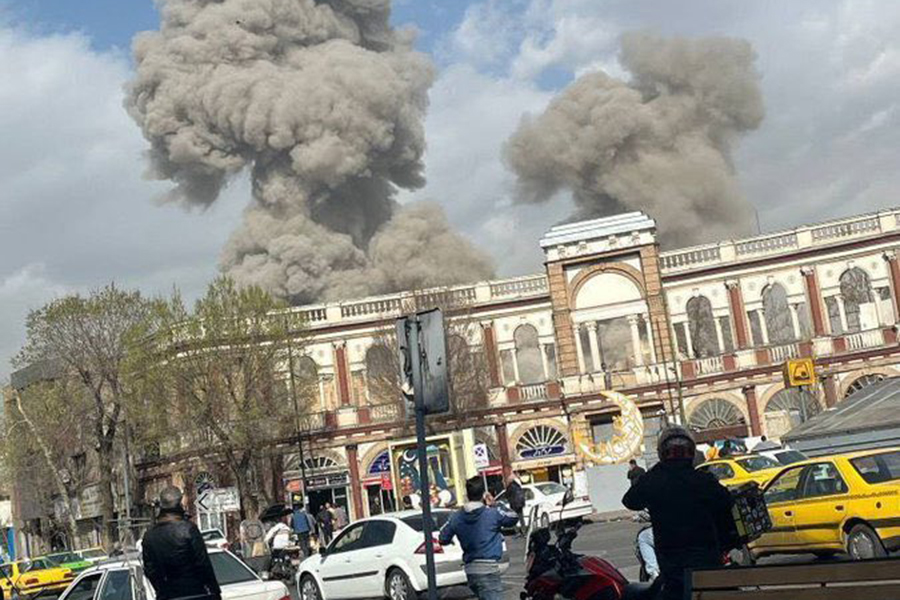
Explosions were reported in Iran’s capital Tehran on February 28 after Israel said it had carried out what it described as a “pre-emptive” strike to remove threats against its territory, sharply escalating tensions between the two regional powers and raising fears of a wider war in the Middle East.

Israeli Defence Minister Israel Katz announced that Israel had launched the attack, declaring it was intended to “remove threats against the State of Israel.”
He also confirmed that a state of emergency had been declared in Israel in anticipation of retaliatory strikes from Iran.
Iranian state media, including the state-run rolling news channel IRINN, reported explosions in the east and north of Tehran.

The broadcaster briefly experienced an audio interruption around 06:30 GMT before resuming programming, displaying a ticker reporting plumes of smoke and the sound of blasts in parts of the capital.
It later aired pre-recorded footage of pro-establishment rallies accompanied by music and archive remarks from Supreme Leader Ali Khamenei calling for unity against “enemies.”
The strikes come amid ongoing diplomatic efforts between US and Iranian officials aimed at curbing Iran’s nuclear programme and avoiding open conflict.
Negotiations had been expected to continue next week, although US President Donald Trump recently said he was not “thrilled” with how the talks were progressing.
Trump had previously threatened military action to pressure Tehran into accepting a deal.
According to reports in US and Israeli media, the United States coordinated with Israel on the attack. CNN and Israel’s Ynet News both reported that Washington was involved in planning the strike. The BBC said it had reached out to US officials for confirmation.
Tensions between Israel and Iran have been steadily rising. Last June, Israel launched an attack on Iran that triggered a 12-day conflict, sometimes referred to as the 12-Day War.
The US later joined Israel in that confrontation, targeting Iranian nuclear facilities.
Israeli Prime Minister Benjamin Netanyahu has repeatedly warned of what he describes as an existential threat from Iran’s ballistic missile programme and has expressed opposition to any agreement that focuses solely on nuclear restrictions without addressing Tehran’s missile capabilities and regional activities.
Iran has rejected demands to limit its ballistic missile programme or to end its support for regional allies and armed groups, including Hamas in Gaza, Hezbollah in Lebanon, militias in Iraq and the Houthis in Yemen, arguing that such conditions violate its sovereignty.
Iranian officials have previously vowed to respond forcefully to any Israeli attack. With a state of emergency now declared in Israel and smoke rising over Tehran, fears are mounting that the confrontation could expand beyond targeted strikes into a broader regional conflict.
But Tehran has insisted it hass no nuclear missiles in its works and that ballistic missiles are within its defensive rights.
About The Author