Uganda’s MSMEs to benefit as EU commits Shs 5.9 trillion investment
The European Union has announced a major boost to Uganda’s private sector, unveiling a €1.4 billion (about Shs 5.9 trillion) investment package under its Sustainable Business for Uganda initiative. The funding is intended to strengthen the country’s export potential, improve standards, and enhance the overall competitiveness of local enterprises.
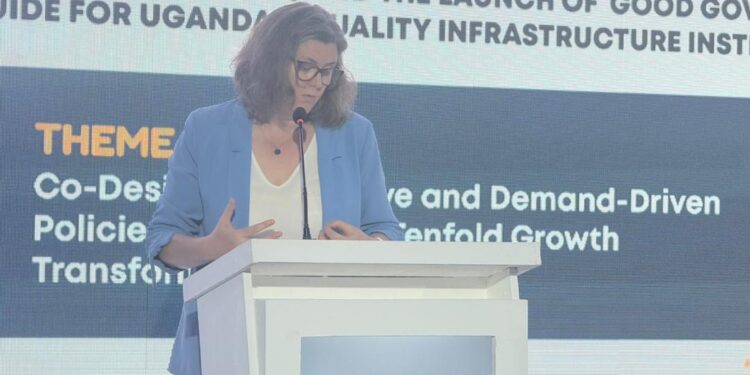
During the National Catalytic Stakeholder Consultation on the review of the MSME Policy (2015) and the National Standards and Quality Policy, Michelle Walsh—who heads the Green Transition and Private Sector Delegation at the EU Mission in Uganda—reaffirmed the EU’s long-standing partnership with Uganda in advancing trade capacity, enterprise growth and job creation.
Walsh noted that the Ministry of Trade, Industry and Cooperatives remains a central partner in ongoing efforts to bolster entrepreneurship and deepen economic cooperation between Uganda and the EU.
Outlining the priorities of the Team Europe framework, Walsh said the bloc is focusing on expanding access to affordable finance, upgrading productive and energy infrastructure, improving skills development, supporting green employment, raising trade standards, and enhancing governance within Uganda’s business environment.
She observed that a number of constraints frequently raised by Ugandan businesses—such as inadequate financing options, unstable power supply, high data costs, certification challenges, slow adoption of artificial intelligence, and the impact of global market disruptions—are already being addressed through EU-backed programmes.
In the area of financing, Walsh highlighted several facilities designed to lift SMEs, including the Uganda Green Enterprise Finance Accelerator (UGEFA), which supports environmentally friendly ventures in energy, waste management, tourism, mobility and manufacturing. She cited the STAR facility’s role in financing agribusinesses, the Yield Fund’s equity and loan support to expanding enterprises, and the EU’s continued contribution to the Agricultural Business Initiative (aBi), which supports production, processing and trade.
She added that the EU is making significant investments in productive infrastructure, including the rehabilitation of power plants, rural electrification efforts, upgrading power transmission networks, and supporting renewable energy innovators and energy-efficient technologies for SMEs.
On human capital development, Walsh stressed the importance of decent employment opportunities. She said the EU—working with Belgium and other Team Europe partners—is expanding vocational training, business incubation, entrepreneurship skilling and financial literacy, with a strong focus on youth and green jobs.
Walsh further revealed that the EU is helping Uganda meet international export requirements by strengthening compliance with sanitary and phytosanitary standards, enabling local goods to access European and other global markets.
She also underscored the EU’s commitment to promoting responsible business conduct, especially in agricultural value chains, through support for human rights due diligence.
Reaffirming the bloc’s long-term partnership with Uganda, Walsh said the EU will continue collaborating with government ministries, the private sector, development agencies and MSMEs to drive sustainable industrialisation and enhance Uganda’s competitiveness.
“The European Union is very pleased to partner with Uganda to promote competitiveness in international markets and expand opportunities for entrepreneurs,” she said, adding that the ongoing consultations are key to developing policies that fully support the growth of small and medium enterprises.
About The Author