Nankabirwa: We Are Ready for First Oil
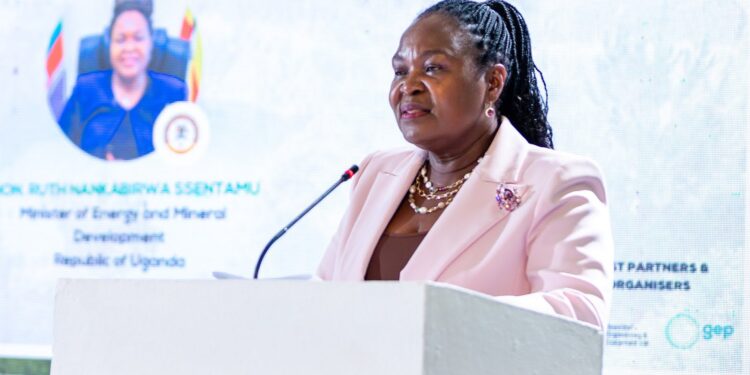
Uganda is edging closer to first oil, with government officials and industry leaders signalling a decisive shift from project development to production at the 11th Annual Oil & Gas Convention in Kampala. Uganda Business Directory
The gathering, held under the theme “Fulfilling the Promise, Forging the Future,” brings together senior government officials, international oil companies, development partners and private sector players at a critical moment for the country’s petroleum sector.
Energy Minister Ruth Nankabirwa said Uganda’s flagship upstream projects Tilenga Project and Kingfisher Project, alongside the East African Crude Oil Pipeline, had moved beyond planning into coordinated execution.
Today’s theme is from development to first oil, unlocking Uganda’s production potential, which reflects exactly where we are. The Tilenga and Kingfisher projects, alongside the East African Crude Oil Pipeline, are no longer plans on paper. They are active, coordinated developments progressing towards production,” she said.
We are seeing a translation of action. The developments are real. We are ready for first oil.”
Uganda discovered commercially viable oil reserves in the Albertine Graben nearly two decades ago, but progress to production has been gradual. Officials now say visible infrastructure and field activity mark a turning point.
Nankabirwa pointed to advances in drilling and the construction of central processing facilities, which will stabilise crude before export.
The central processing facility is very critical. It does the primary processing before the crude is exported. Minus that, you don’t have crude to go through the pipeline,” she said.
She added that drilling campaigns are progressing, with multiple wells already completed and ready for extraction once export infrastructure is fully aligned.
“They have drilled a number of wells that even if you tell them tomorrow to extract, they will do so. We are ready with a number of wells drilled in order for us to be able to see the first oil.”
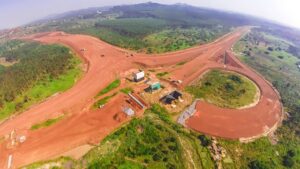
The government has accelerated development of supporting infrastructure, including roads, industrial zones and the near-complete Kabalega International Airport.
“These are not isolated efforts. They are synchronized components of a single national objective, which is a timely, efficient and sustainable first oil,” Nankabirwa said.
She said the airport is nearing completion and will be commissioned soon, providing critical logistics support to the oil region.
However, she acknowledged delays in industrial park development despite investor readiness.
“We have identified 31 investors who are ready to go, but there are some preliminary infrastructure that we have to work on. We really need the industrial park running to encourage investors to come.”
Deputy Speaker Thomas Tayebwa said Uganda is transitioning from a capital-intensive construction phase into a long-term production economy.
The message coming from government and industry is very clear. Uganda is moving from a construction phase into a long-term production economy,” he said.
“We are therefore moving from building the infrastructure to running and maintaining it over the long term, creating sustained opportunities for many years to come.”
He described the shift from capital expenditure to operational expenditure as a defining moment for value creation.
“This is where real value will be created, through long-term service contracts, through technology transfer, and through the growth of Ugandan enterprises.”
Tayebwa also called for expanded refining capacity within East Africa, arguing that exporting crude while importing finished products undermines economic gains.
“We don’t need to go for 650,000 barrels, let’s go for around 300,000 to 400,000, then add on the Ugandan one,” he said. “We refine our products from East Africa so that we don’t export our jobs.”
He pointed to rising costs in manufacturing sectors reliant on imported petrochemical inputs.
“Manufacturers of plastics, cosmetics and fertilisers have seen raw materials go up significantly. These petrochemical products are extremely crucial. They are a very big driver to our economy.”
Both officials framed oil production as a starting point for broader industrialisation, including petrochemicals, fertilisers and plastics manufacturing.
“First oil is not the destination, it is the beginning,” Nankabirwa said. “The future we are forging includes a vibrant petrochemical industry. We are laying a foundation for a production phase that must deliver lasting value for our people.”
Tayebwa said Parliament would maintain strict oversight of the sector, focusing on transparency, revenue management and environmental compliance.
“As Parliament, we will continue to provide oversight ensure petroleum revenues are managed prudently
, and that local content commitments are honoured.”
About The Author