Copyright Law: What it means for creators and consumers
Parliament passed the Copyright and Neighbouring Rights (Amendment) Bill on 17 March 2026, raising hopes that Ugandan content creators and performing artists could soon be guaranteed legal protection against infringement of their works.

The Private Member’s Bill tabled by a musician-turned politician, Hillary Kiyaga, aka Dr. Hilderman, awaits Presidential assent. It has been widely supported by Ugandan Musicians whose work has been played without consent and adequate reward.
The Bill that, among others, directs that the originator of creative works, including musicians and authors, receive better remuneration for their productions.

While the country has an existing copyright law, its amendment, once assented to, will usher in stricter penalties aimed at deterring persons who publish, broadcast, distribute, or reproduce books, music, or other works without license and authorization from the owner or their agents.
Some have suggested that the Bill is too harsh by suggesting a ten-year jail sentence, a fifty-million-shilling fine, or both for copyright infringement.
This week, as part of the awareness, the Uganda Law Society, under its weekly Radical New Bar briefing, brought together a panel of experts to reflect on why the amendment and its likely implications.
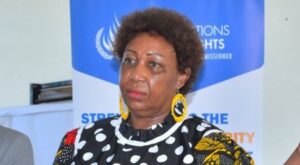
Miriam Nabatanzi, Commissioner of the Copyright and Neighboring Rights Department at the Uganda Registration Services Bureau, said the bill is coming in to amend a few provisions.
“What that means is that we are not repealing our Copyright Law. We are only enhancing the provisions and the amendment.”
She added that the amendment will ensure that Uganda’s Copyright law conforms to the international treaties and conventions to which Uganda is a signatory.
“It’s important to demystify the saying out there that when the bill passes, local content is going to be shunned and users will opt for foreign content. That is not the case. The first treaty that comes into play is the Berne Convention.”
According to the World Intellectual Property Organization (WIPO), the Berne Convention, adopted in 1886, deals with the protection of works and the rights of their authors. It provides creators such as authors, musicians, poets, painters, etc., with the means to control how their works are used, by whom, and on what terms.
Nabatanzi emphasized that the Berne Convention provides for the scope of works that are protected by copyright.
“It’s important to clarify that we are not looking at musical works only. Did you know that software programs are also protected as copyright? Did you know that architecture drawings are also protected? So, the domains are that wide.” Said Nabatanzi.
“The Berne Convention says you protect everything artistic, scientific, and literary, as long as it is original and it originates from a human mind. And then it also gives us the rights of the authors.”
She explained the rights in practical terms. “The authors are the people who create these works. When they create these works, we’ve already appreciated that this is private property. They have some rights that they enjoy. The first one—they control who uses their work. They determine which people can play their work, and for what fee. They determine their compensation.”
From the Convention she the authors also have a right to be credited. “You cannot use someone’s works and not acknowledge them. And finally, they also have the right to consent. You cannot use someone’s work without authorization.”
Kenneth Muhangi, an Intellectual Property lawyer who has advised the judiciary and other government bodies, said Uganda is obliged under the Berne Convention to protect works that originate from member states that are contracting parties.
“When their works are played in Uganda or utilized here, they must get compensated. This is how reciprocal agreements between collecting management organizations work,” he stated.
“When you are a broadcaster playing songs from Beyoncé, yes, you are indirectly contributing to Beyoncé’s royalties because Uganda Performing Rights Society has signed a reciprocal agreement with the CMOs in the US. The money accumulated from usage in the US is remitted to that foreign society, and then they remit it to UPRS. In exchange, UPRS will remit the royalties for the works. That’s how it works.”
Nabatanzi explained that under the principle of automatic protection. “Copyright is automatic once you reduce it into writing or a form that can be seen or heard. You do not need to register, although registration is desirable for evidential purposes.
About The Author