U.S., Saudi Arabia lead $2.5 billion in remittances to Uganda
The United States and Saudi Arabia have emerged as the primary sources of diaspora remittances to Uganda, which reached a record $2.5 billion last year.

New data released Wednesday by the Bank of Uganda shows that the United States remains the largest contributor, accounting for $702 million, or 28 percent of total inflows. Saudi Arabia, the United Kingdom, the United Arab Emirates and Canada follow as the other top sources of funds.

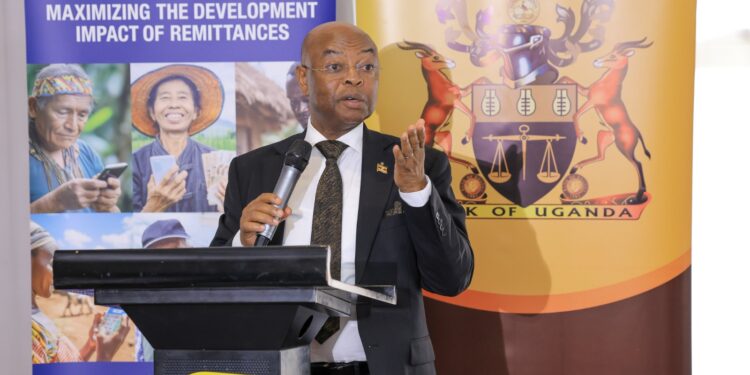
Bank of Uganda Deputy Governor Augustus Nuwagaba launched the Granular Remittance Dashboard at the Golden Tulip Hotel, noting that the $2.5 billion figure is $1 billion higher than previous estimates. The increase is attributed to an enhanced data collection framework that captures transaction-level reporting across the financial sector.
Nuwagaba described the improved tracking as a fundamental achievement for the country’s economic monitoring.
Remittances are a lifeline, they are more than statistics, they represent the sacrifices of Ugandans abroad who work to earn this money, Nuwagaba said. They provide for families and households both formally and informally and have proven to be a sustainable source of foreign currency inflows, competing with other sources such as coffee and tourism, which supports our Balance of Payments.
The dashboard revealed that nearly 75 percent of inbound remittances are received through digital channels, with 61 percent of all transactions terminating in mobile money accounts. The average value per transaction was recorded at $152 across more than 16 million total transfers in 2025.
Dr. Hillary Musoke, senior presidential advisor on agribusiness and value-addition development who represented the State House Diaspora Unit said the granular data will allow for evidence-based policymaking to better support the millions of Ugandans who rely on these contributions for education, healthcare and household needs.
While Uganda is a net recipient of funds, the central bank noted that $402 million was sent out of the country last year, primarily to India, Kenya and the United States.
About The Author