US Approves Additional Shs302 Billion for Ebola Response
The United States has approved an additional $80 million (about Shs302.6 billion) to strengthen the ongoing Ebola response in Uganda and the Democratic Republic of Congo (DRC) amid growing concern over the spread of the deadly Bundibugyo strain across the region.
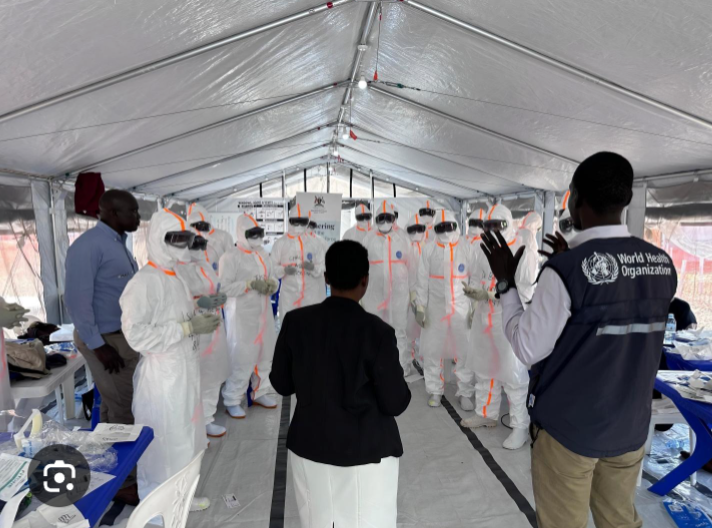
The latest funding package will support emergency medical operations, border surveillance and the procurement of protective equipment for frontline health workers operating in high-risk areas
In a statement released on Thursday by the Department of US Foreign Assistance, Washington said the new support would help reinforce containment efforts as health authorities battle rising infections linked to cross-border movement between Uganda and eastern Congo.
“The United States has approved an additional $80 million for the Ebola outbreak response. This will help procure and deliver additional PPE for healthcare workers in high-risk areas; enhance border screenings and surveillance at key points of entry; expand contact tracing to identify and diagnose individuals as early as possible; and procure diagnostic supplies including test kits,” the statement reads.
The new package comes on top of an earlier $112 million (about Shs423.6 billion) in bilateral foreign assistance already committed toward the regional Ebola response.
US authorities also announced an additional $50 million (Shs189.1 billion) contribution to the United Nations Office for the Coordination of Humanitarian Affairs (OCHA) to finance up to 50 Ebola response clinics in affected communities.
“State Department implementers have deployed responders to dozens of health facilities in Ituri, North Kivu, and South Kivu in the DRC and are working to improve the capacity of Ebola treatment centers and Ebola transit units across affected areas,” the statement added.
The US government further disclosed that it is channeling another $300 million (around Shs1.13 trillion) through OCHA pooled funds to Uganda and the DRC to support broader humanitarian interventions linked to the outbreak.
The latest funding announcement comes at a time when Uganda is battling a fresh Ebola outbreak that health officials say originated from neighbouring eastern Congo before spreading across the border through regional movement.
According to health authorities, Uganda had by Wednesday confirmed seven Ebola cases and one death linked to the outbreak. Most of the infections are reportedly associated with health workers and travellers in Kampala.
The outbreak has been linked to the rare Bundibugyo strain of Ebola, for which there is currently no approved vaccine or targeted treatment, increasing pressure on authorities to rely heavily on containment measures.
The World Health Organization recently classified the situation as a Public Health Emergency of International Concern following fears of wider regional transmission.
In response, the Ugandan government has rolled out sweeping public health restrictions aimed at reducing large gatherings and limiting population movement
Music concerts, entertainment shows and cultural festivals have been suspended, while political rallies, marathons and public recreational events have also been halted.
The Uganda Communications Commission additionally postponed Uganda Film Festival activities and the awards gala that had been scheduled for early June.
President Yoweri Museveni also cancelled this year’s Martyrs Day celebrations, one of the country’s biggest annual religious gatherings that normally attracts thousands of pilgrims from Uganda and neighbouring countries
Authorities have also tightened controls along Uganda’s western frontier with the DRC.
Uganda Airlines suspended flights between Entebbe and Kinshasa, while local leaders in Kikuube District temporarily closed several crossing points along Lake Albert and suspended cross-border market activities.
Health officials say hundreds of contacts linked to confirmed Ebola patients are currently under monitoring and quarantine as surveillance teams race to prevent further spread of the virus.
International emergency response organisations, including Project HOPE, have since joined Uganda’s Ministry of Health in supporting treatment units, protective gear distribution and case-tracking operations.
Medical experts warn that the absence of a licensed vaccine for the Bundibugyo strain makes early detection, isolation and pu
blic cooperation critical in containing the outbreak.
About The Author